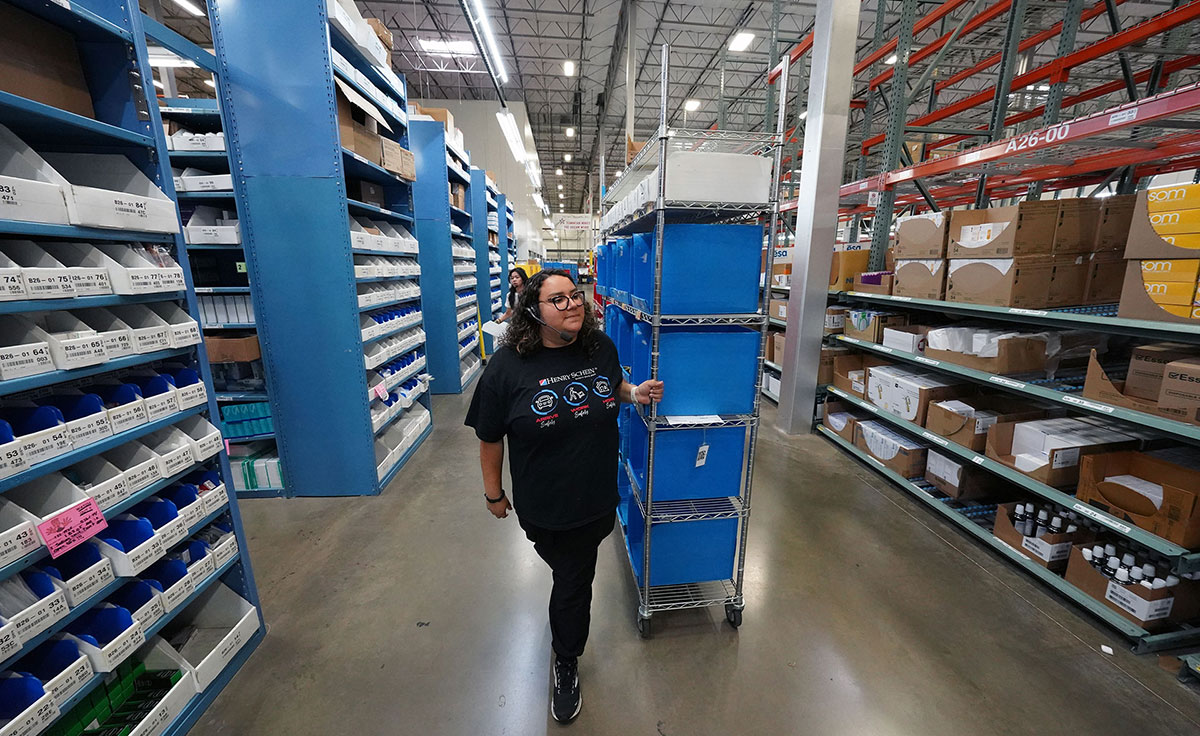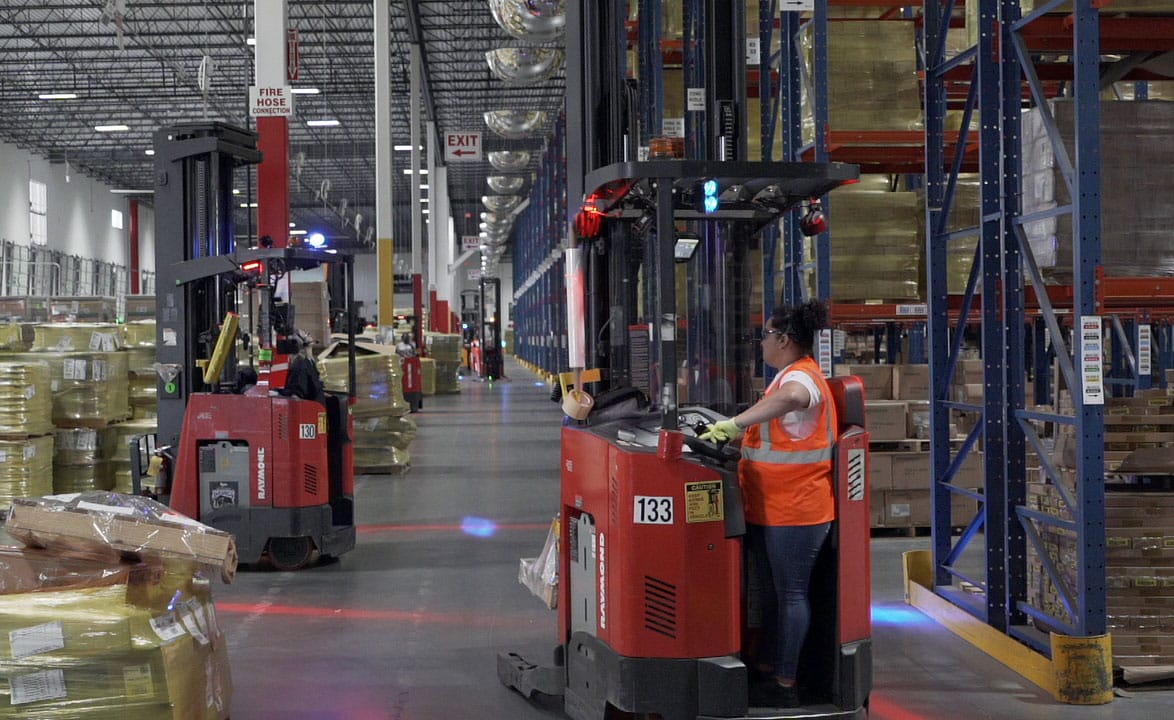

A little over ten years ago the first voice directed bucket brigade started up in the Deerfield Beach, FL distribution center of Republic National Distributing Company. As the name suggests, in bucket-brigade picking workers pick items into totes or cartons and pass the carton along to subsequent workers in a pick module. Bucket brigades use a zoneless, pick-and-pass process which creates a highly efficient and self-balancing work unit that eliminates bottlenecks without direct supervisory intervention.

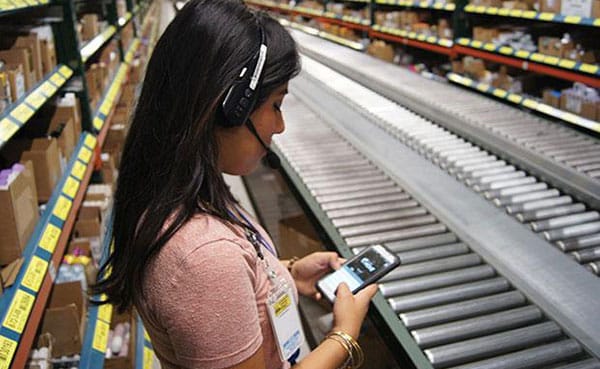
There’s a great description of the bucket brigade process on the Web, including a short animation (thanks to John Bartholdi and Donald Eisenstein). We also have several good live examples of Jennifer voice directed bucket brigades in action, including this clip from a wine and spirits distribution center. In this video, the picker has the dialogue working at top speed – she’s picking hundreds of bottles an hour. Jennifer tells her what shelf location to pick from and how many to pick. The picker speaks the location check digit and quantity. She says “pass carton” to pass the carton to the next picker in the module and then enters the carton ID from the next carton in line. Lucas has dozens of other examples of bucket brigade pickers in a variety of DCs (contact us if you’d like to see other videos).

Bucket brigades are nothing new in the warehouse, but before Jennifer was installed in Deerfield Beach, bucket brigade picking systems relied on paper pick lists that traveled with the cartons down the conveyor. The problem with paper is that it creates wasted time while pickers read and handle pick sheets. So some DCs installed pick to light systems. While lights provide productivity, they are costly to install and maintain. And some pick to light picking systems use fixed picking zones – these are not bucket-brigades. Restricting each associate to a fixed number of bays defeats the purpose of the bucket brigade.

And that’s where Jennifer comes in. Republic National Distributing Company saw an opportunity for voice in their bottle pick module, which had been using paper. So in 2001, the first Jennifer voice-directed bucket brigade was fired up. The system delivered high double-digit productivity gains along with reduced picking errors. Based on the initial success at RNDC, Jennifer spread like wildfire in the wine and spirits industry, where she is now used at dozens of DCs.

The story doesn’t end there. Retail and other industries also started looking at voice as an alternative to their expensive light systems, but the conventional wisdom was that voice technology would slow workers down compared to light-based picking. Through innovative dialogues and other process changes Lucas has been able to deliver Jennifer applications providing equivalent or better productivity than light-based bucket brigades at a number of major retail DCs. In fact, Jennifer has replaced light-based picking at a number of retail fulfillment centers.

Compared to the pick to light systems she replaced, Jennifer also delivered improved accuracy, in large part because pickers are required to explicitly confirm the quantity picked – they say “grab two” when picking two pieces. Voice-based bucket brigades also provide complete accountability since the system tracks who picks what into which order carton. To get the same level of accountability with a light-based system, associates would need to pick in fixed zones, which will inevitably lead to idle time and defeat the productivity goals of the bucket-brigade concept.

One of the process innovations in voice-directed bucket brigades in retail, publishing and other industries, is the ability to batch orders in a train of cartons, so that the picker reaches into each slot once to fill multiple orders. The first Jennifer batch bucket brigade system was installed as far back as 2004. These batch picking systems have led to ultra-efficient picking processes that just aren’t possible with lights or other technologies. Compared to traditional single order bucket brigades, batch picking bucket brigades offer additional incremental productivity gains. Not the huge 20 percent or greater gains you get from moving from paper or scanning to voice, but measurable gains resulting in tangible savings. Best of all, these additional points of productivity are free – they are the product of creative process engineering rather than additional capital investments.

Be the first to comment

In voice picking - and a marathon - a pace-setter can push the field to run faster.

Last month a few folks from Lucas participated in the City of Pittsburgh Marathon. Our team included one marathoner, two half marathoners, and a team of five relay runners (slackers!). The interesting and relevant news is that the overall winner of the 26.2 mile race was the runner who was hired to set a fast pace – the pace setter or “rabbit.” The rabbit’s job is to push the other runners to run a fast race.

So what does any of this have to do with voice picking?

Pet Supermarket, a regional retailer based in Ft. Lauderdale, has its own Rabbit, according to Oscar Martinez, Director of Distribution. Oscar knows that when he assigns this guy – let’s call him Roger – to pick in the “dog pound“ (a pallet rack section where they pick heavy bags of dog food and similar items), Roger is going to do his best to pick faster than the guys who typically work there. And the other guys in the dog pound are going to put out a special effort to beat Roger.

At break times the guys check their productivity rates with managers who can view up to the minute statistics using Jennifer’s Engage Management Console. (Engage is the Web-based management reporting, configuration and administrative application that is a key part of Jennifer VoicePlus.) At Pet Supermarket this friendly competition boosts productivity. But it’s only possible if there’s a way for users to get feedback on their pick rates throughout the shift.

Likewise, objective performance feedback is a key component of any well-designed labor standards program. If you want your workers to meet their goals, they really need to know where they stand. The problem for many labor standards programs is that the feedback comes after the fact – at the end of the shift or the end of the week, when its too late for workers to pick up the pace. That is, until now.

Lucas systems recently introduced a Speedometer module to address this challenge. Speedometer gives Jennifer voice users real-time productivity updates as they work. So while a user is working he can ask “Jennifer what is my current productivity?” Better yet, DC managers can configure Speedometer so that Jennifer will warn a user if his or her productivity drops below 90% of pre-defined pick rates (based on historical averages or engineered labor standards). The first customers that rolled out Speedometer have seen immediate gains in productivity above and beyond the increases they experienced when first moving to voice. In each case, Speedometer was turned on after users had been working with Jennifer, at a point where the initial productivity gains from moving to voice had reached a plateau.

The direct productivity gains attributed to Speedometer are typically a few incremental percentage points above what is gained in moving from RF or paper-based picking to voice. And in today’s hyper-competitive business environment, a few percentage points is what separates a winner from an also-ran.

Be the first to comment

Voice Picking With Scanning at Oriental Trading Company

February 4, 2011

If you read logistics trade magazines you’d think that multi-modal applications combining voice and scanning are sweeping the industry. Despite the buzz, many people I talk to still aren’t convinced that scanning has a place in a voice picking process. I saw a great example of where scanning does fit with voice when I visited Oriental Trading Company.

Read the full article →

The Myth of the $100 Voice Picking Terminal

November 16, 2010

The bottom line is that we’re not likely to see a viable $100 voice picking terminal for years. But we’re starting to see some multi-modal devices and rugged PDAs with street prices of less than $1000. Compared to prices 5 years ago, this is a dramatic shift. And these devices offer far more functionality than yesterday’s voice-only appliances.

Read the full article →

A Hybrid Approach to Speech Recognition For Voice Directed Picking

October 7, 2010

Serenade provides the advantages of minimal training and adaptation in a single product. What that means is you save 20 minutes or more in initial training, get high accuracy from day one across all users (even challenging users), and don’t have to re-train after getting comfortable with the system.

Read the full article →

Are Voice-Only Terminals Headed for the Trash Heap of Obsolete Technology?

September 13, 2010

Just like the word processors of my college days – and the talk-only cell phones of the recent past – it’s just a matter of time before we look back on single-purpose voice picking terminals as a quaint reminder of how far warehouse technology has evolved. The only question is whether that happens in one year, three years, or five?

Read the full article →

Taming the Temp Worker Challenge With Voice

August 24, 2010

Most DC managers view temporary workers as a necessary evil: they need the extra hands to meet seasonal order peaks, but they dread the extra work required to bring temps up to speed, not to mention the inevitable increase in errors from inexperienced workers. John Migliore, General Manager of the Do it Best Retail Service Center in Montgomery, NY, is an exception.

Read the full article →

Technophobia, Skepticism And Voice Picking

August 1, 2010

A Lucas project manager just returned from a Jennifer voice-picking deployment with a story of “Joe the Selector” who thought voice was never going to work in his DC. Like most other skeptics we see, this “Joe The Skeptic” became “Joe The Voice Champion” his first day working with Jennifer.

Read the full article →

Ban Distracted Driving! How about Banning Distracted Picking?

May 6, 2010

Is texting while driving really any worse than using paper pick lists or an RF terminal in a distribution center, especially if you’re “driving” a pallet jack or fork lift? The answer: put down the terminal, put down the pick lists, and let Jennifer™ guide you by voice.

Read the full article →

Voice-Directed Warehouse Tour in Waco Texas – Stay Tuned For Future Tours

March 23, 2010

Last week Do it Best Corp. opened the doors of its Waco, TX Distribution Center to folks from other warehouses in the area, giving people an up-close look at a modern voice-picking system in action. Lucas is planning additional tours at other locations, so if you’re interested in taking part in a future event, sign up for blog updates using the box at the top of this page.

Read the full article →