 By Bill Erdely, Senior Director – Solution Consulting & Project Management
In modern distribution centers, outbound fulfillment, including picking, packing, and sorting, usually commands the bulk of automation investments and engineering attention. Yet, high-performing supply chain leaders recognize a fundamental operational truth: outbound efficiency is strictly bounded by inbound discipline.
How product moves from the receiving dock into primary or reserve storage dictates travel time, inventory accuracy, space utilization, and replenishment labor for days or weeks to come.
Despite this, inbound operations in many facilities still rely on legacy models: static paper-based routing, rigid WMS-directed drops, or unstructured “user-selected” putaway. Here is an exploration of how destination-selection methods have evolved and why dynamic, multi-factor system-directed putaway is transforming inbound logistics.
The Spectrum of Putaway Strategies
Putaway models generally fall across a spectrum of decision-making authority, from entirely manual worker discretion to static host rules, and ultimately to intelligent, real-time platform optimization.
Putaway Strategy Spectrum
| User-Selected | Zone-Directed | WMS-Directed | Dynamic System-Directed |
|---|---|---|---|
|
|
|
|
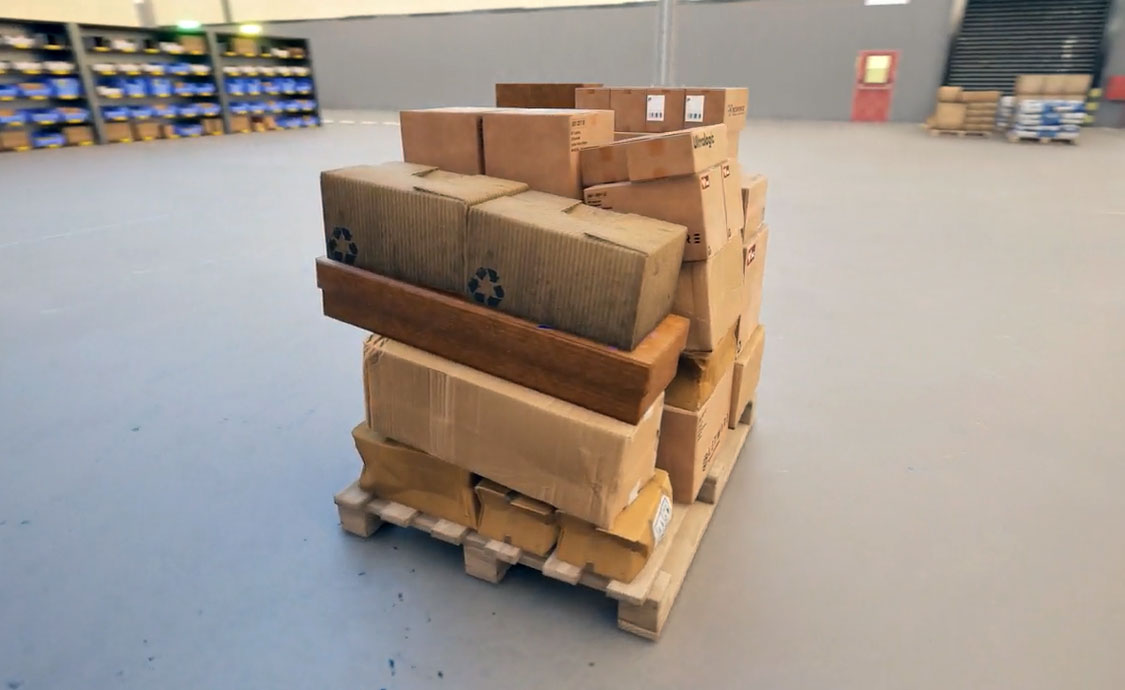
- User-Selected Putaway – With user-selected putaway, workers receive pallets or mixed carts at the dock and have the freedom to place stock in any open location they find, scanning the bin barcode to confirm placement. Although this approach is flexible and requires no algorithmic overhead, it often creates severe “honeycombing,” or fragmented and underutilized space, while increasing the risk of mixed-lot errors and velocity mismatches, such as placing fast-moving SKUs in deep or hard-to-reach racking.
- Zone-Directed Putaway – In a zone-directed model, the system routes the operator to a general area, aisle, or temperature zone based on the product category, but leaves the final bin selection to the operator. This structure helps prevent major placement errors, such as storing frozen goods in dry storage, but provides limited optimization of storage density, FIFO and lot tracking, or ergonomic pick paths.
- Pre-Determined WMS-Directed Putaway – With pre-determined WMS-directed putaway, the host warehouse management system assigns fixed storage locations when the advance shipping notice or receiving record is generated. Because these assignments are made before the worker reaches the floor, they may not reflect changing conditions. If a designated slot is full, blocked by equipment, or assigned concurrently to another operator, the workflow can stall and force the worker to trigger an exception, back out of the task, or wait for supervisory intervention.
The Shift to Dynamic, Intelligent System-Directed Putaway
Next-generation warehouse software platforms bridge the gap between rigid host instructions and manual chaos through dynamic, real-time destination selection executed right at the moment of acquisition. Rather than relying on static rules generated hours in advance, modern system-directed putaway calculates optimal storage locations through a layered evaluation engine.
Importantly, this intelligence does not have to reside solely within a WMS. A WES or broader warehouse optimization platform can provide the real-time decision layer, using warehouse maps, live inventory, demand, task priorities, and floor conditions to determine where product should go and how the move should be executed.
When an operator scans an LPN or putaway task at the dock, the system first checks whether the same SKU is already stored in a location with sufficient available capacity. If so, it directs the product there for consolidation while reserving the required space to prevent conflicts with other active putaway tasks.
If consolidation is not possible, the system evaluates empty locations against the product’s velocity, dimensions, weight, and other storage requirements, then assigns the best available bin. When no location fully satisfies the preferred criteria, the workflow automatically applies fallback rules, such as selecting an alternate location or directing the operator to an appropriate zone, so putaway can continue without unnecessary delays or manual intervention.
The best destination is not simply the nearest open slot. Putaway should account for where the item will ultimately be picked and replenished. Reserve inventory may be positioned near the priority pick location or replenishment zone assigned through dynamic slotting, reducing future travel, replenishment effort, and congestion. Advanced systems can weigh velocity, affinity, dimensions, capacity, compatibility, forecast demand, pick-path cost, and machine-learning insights together so each inbound placement supports downstream execution.
Key Pillars of System-Directed Putaway
- Smart Location Selection – When a worker prepares items for putaway, the system reviews available storage options and recommends the most appropriate locations. It first looks for opportunities to keep similar inventory together and make better use of existing space. If that is not possible, it selects an open location suited to the item and its expected level of activity. When preferred space is unavailable, the system recommends a practical alternative so work can continue without unnecessary delays.
- Coordinated Assignments – The system coordinates assignments across the workforce so multiple people are not sent to the same limited space. Once a location is assigned, its available capacity is updated to keep other putaway tasks accurate and avoid conflicts.
- Efficient Travel – Rather than sending workers back and forth across the facility, the system organizes putaway stops into a more efficient sequence. This reduces unnecessary travel and helps workers complete each load faster.
- Flexible Exception Handling – If a recommended location is unavailable, the worker can report the issue and receive a new destination immediately. The system also updates the location status so others are not sent there, allowing the process to continue with minimal disruption.
Comparison: Traditional vs. Dynamic System-Directed Putaway
| Operational Capability | Traditional/Static WMS Approach | Dynamic System-Directed Putaway |
|---|---|---|
| Destination Calculation | Pre-calculated at ASN/receiving time or fixed by item master. | Real-time calculation at dock acquisition based on live inventory. |
| Multi-Item Batch Routing | Static queue order or individual manual trips. | Dynamic travel-path sequencing across multi-LPN batches. |
| Capacity & Collisions | Risk of concurrent workers directed to the same empty slot. | Virtual reservations account for in-flight/directed inventory. |
| Exception Handling | Manual supervisor intervention or rigid task cancellation. | Instant inline re-selection algorithm with automated slot status updates. |
| Interaction Modality | Screen-heavy scanning and manual menu navigation. | Hands-free multimodal/voice-directed workflows with barcode verification. |
This is why warehouse design often starts with the outbound strategy. By mapping pick paths, priority pick zones, replenishment flows, shipping cutoffs, and equipment constraints first, operators can work backward to define smarter inbound and reserve-storage strategies. Putaway then becomes an extension of the fulfillment plan rather than a stand-alone receiving activity.
Building a Resilient Inbound Foundation
Treating putaway as a simple clerical task of “putting items away” leaves substantial operational efficiency on the table. Moving from rigid or unguided methods to dynamic, system-directed putaway delivers tangible compound benefits.
Dynamic, system-directed putaway maximizes cube utilization by consolidating inventory and reducing stranded space. It also reduces material-handling travel by optimizing routes for inbound storage as well as subsequent outbound picking. Just as importantly, it improves floor agility by allowing operations to adapt quickly to inventory discrepancies, blocked aisles, and high-volume receiving surges.
A distribution center’s outbound speed will always depend on its inbound discipline. Optimizing the journey of a pallet the second it leaves the dock is the smartest way to ensure smooth, rapid order fulfillment downstream.

Bill Erdely is the Senior Director of Solution Consulting and Project Management at Lucas Systems, bringing over 25 years of experience in supply chain execution and technology. His expertise spans warehousing and distribution, transportation, automation, and labor management systems, with a deep background in serialization, RFID, and software validation.
Throughout his career, Bill has led solution design and delivery for Tier-1 organizations across industries, holding leadership roles at companies like Körber, DM Logic, and RedPrairie. He has extensive hands-on experience with a significant number of distribution and supply chain systems and platforms.
Share This Story, Choose Your Platform!
Continue Reading
-
 Learn More
Why Data Visualization is Key to Better Decision-Making in Warehouse Operations
Categories: Slotting| Warehouse Management System
-
Learn More
Embracing Agile Principles in the Warehouse – Continuously Learning and Improving with Retrospective Sessions
Categories: Warehouse Management System
-
 Learn More
The True Cost of Bad Pallet Building and What You Can Do About It
Categories: Warehouse Management System