Robotic Warehouse Automation

Orchestrate and optimize the work of people and robots with Jennifer™

As autonomous mobile robots (AMRs) find their place in the DC, your challenge is to coordinate and optimize the tasks of humans and their robotic coworkers. Our Jennifer™ AI solves this problem, helping you hit your cost, quality, and service targets blending AMRs and on floor workers to optimize labor hours. Jennifer™ can help you:

  • Alleviate labor challenges using robots in multiple workflows
  • Maximize productivity by dynamically allocating workers and robots
  • Improve ergonomics and eliminate workplace injuries
Robot warehouse - no logo

Key Takeaways: 

  • Warehouse robotics automate repetitive material handling tasks.
  • Robotics improve productivity, accuracy, and workplace safety.
  • AI coordinates robots and warehouse associates for maximum efficiency.
  • Warehouse execution software optimizes robot and human workflows.
  • Robotics deliver the greatest ROI when integrated into a broader warehouse optimization strategy.

How Robots Work With People

Vecna Robotics - Case Flow Worker and CPJ

Robots can perform order picking, product putaway and in-warehouse transfers, among other operations. Jennifer™ coordinates these processes, communicating with robots and directing workers by voice. Workers confirm their tasks using voice, scan, RFID, or robot-mounted screens or lights. Lucas dynamic warehouse automation software can help you with these robot-assisted processes:

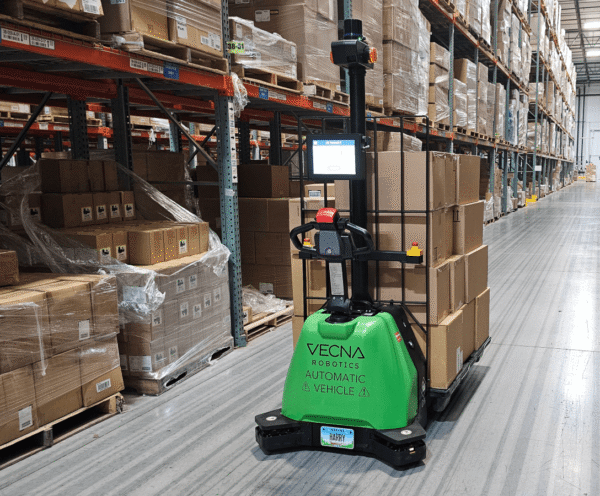
Robot-to-goods picking. AMRs travel among workers in pick zones, stopping at pick locations where workers (directed by voice) pick and put items in the appropriate tote on the AMR. Multiple robots meet each worker, who can remain in a smaller pick area.

Goods-to-person picking. AMRs carry products in totes or stowed on moveable shelves to pick-stations where workers pick, scan, and place items in totes for shipping. Travel time is dramatically reduced for workers, allowing them to focus purely on picking.

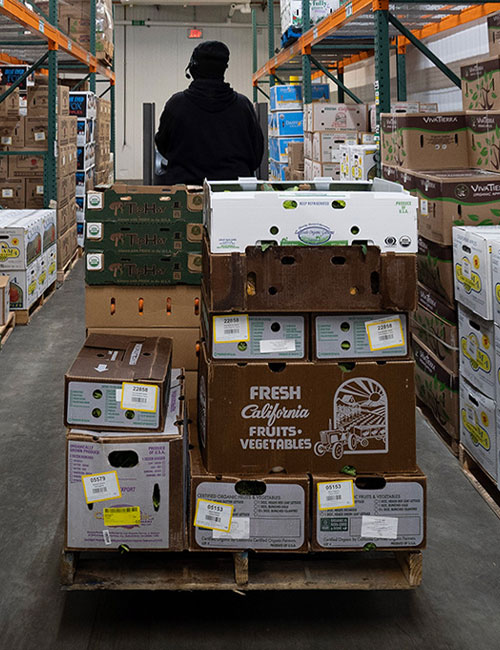
Follow-the-robot picking or replenishment. AMRs function like powered, intelligent picking carts or pallet jacks. Jennifer™ AI creates batches, improving density and enabling each AMR to carry more orders. This optimizes collaborative picking productivity, reduces needed labor and wasted travel time.

Transit robots. Voice-directed workers use carts in designated picking aisles, off-loading completed totes or cartons at staging locations. Jennifer then notifies an available robot to fetch and transport the tote to its next destination.

Full pallet moves. Robots can perform full-pallet put-away or replenishment moves, replacing people in one of a DC’s most travel-intensive activities. When a worker calls a slot empty, Jennifer™ can notify an AMR that a let-down is needed. The benefits in this area include safely transporting large ad heavy payloads autonomously, while creating a less-congested and safer warehouse environment. It also allows DCs to repurpose forklift operators to higher value tasks, rather than spending labor hours on wasted travel. Common work types here include putaway, pallet picking and cross docking.

Vecna Robotics CaseFlow™ Voice

Built on Vecna’s CaseFlow orchestration and powered by Jennifer™ voice technology, CaseFlow Voice redefines how people and robots work together by bringing natural, conversational voice interaction into robot‑assisted case picking.

Robots handle travel and positioning, while voice eliminates time spent scanning or manually confirming picks, driving higher throughput with less cognitive and physical effort.

Instead of relying on screens, scanners, or handheld devices, associates interact hands‑free through intuitive voice prompts and confirmations. CaseFlow Voice creates a more fluid, human‑centric experience that reduces friction between workers and automation, making advanced robotics easier to adopt and faster to scale.

How Warehouse Execution Systems Orchestrate Robotics 

Robots deliver the most value when orchestrated through intelligent Warehouse Execution Systems. Lucas EthOS features an advanced WES that utlizes Dynamic Work Optimization, Lucas' proprietary AI and Machine learning formula engine. This engine treats humans and robots as coordinated resources within a single execution model, dynamically assigning tasks based on real-time priorities, location, and capacity. Jennifer™ AI, voice-directs pickers hands-free alongside autonomous mobile robots, eliminating barcode scanning and touchscreen interaction while ensuring both workers and machines stay optimally utilized. 

This orchestration layer sits between the WMS and the warehouse floor, receiving order data through standard interfaces and applying AI-powered batching, sequencing, and path optimization across all resources, both human and robotic. The result is seamless collaboration: robots handle long-distance transport while workers focus on high-value picking, with every assignment continuously optimized to meet shipping deadlines and balance workloads in real time. 

Frequently Asked Questions: 

Warehouse robotics refers to automated machines, from autonomous mobile robots (AMRs) and robotic pallet jacks to goods-to-person shuttles and tuggers, that perform or assist with physical tasks in a distribution center such as transporting products, retrieving inventory, or assisting pickers. These systems use technologies similar to self-driving vehicles, including AI-powered obstacle avoidance, pathfinding, and dynamic navigation. Modern warehouse robotics are designed to work safely alongside human workers, augmenting their capabilities rather than operating in isolation. 

Robots improve operations primarily by eliminating long-distance travel, the single largest time drain in most warehouses. AMRs can transport products between zones, deliver pallets to staging areas, or meet pickers directly in the aisle, allowing workers to stay in productive picking zones rather than walking 5–15 miles per day. Lucas Systems extends these gains by orchestrating human workers and robots through a unified execution layer, using Jennifer™ to voice-direct pickers alongside robotic co-bots, eliminating barcode scanning and touchscreen interaction while optimizing assignments across both people and machines. 

Common types include: goods-to-person robots that bring shelves or totes to stationary pick stations; co-bot pallet jacks that travel autonomously to meet workers at pick locations; autonomous pallet jacks for long-distance transport between zones; tuggers that pull trains of carts to staging areas; and counter-balanced fork trucks for heavier lifts. Each type suits different operational profiles, from piece-picking in e-commerce to full-case selection in grocery and wholesale distribution. 

Robots create new execution challenges that require intelligent orchestration software. While robotics companies focus on building reliable machines, they typically don’t optimize the human workers picking alongside them. Lucas addresses this by treating robots and people as coordinated resources within one work execution model. Jennifer™ AI, voice-directs pickers through optimized assignments while Lucas’s Dynamic Work Optimization engine batches, sequences, and routes work across both humans and AMRs,  ensuring robots are fully utilized and products are sorted, packed, and shipped on time. 

AGVs (Automated Guided Vehicles) follow pre-defined travel paths, typically outside main worker areas, using fixed infrastructure like magnetic tape or embedded sensors. AMRs (Autonomous Mobile Robots) use AI for real-time pathfinding and obstacle avoidance, roaming freely among workers without fixed guides. Cobots (collaborative robots) are designed specifically to work alongside humans, like a robotic pallet jack that can operate autonomously or be manually driven, meeting workers at pick locations in a dynamic “CaseFlow” style where the robot comes to the picker. 

Warehouse employment continues to grow even as robotics adoption accelerates. Today’s robots need people: they assist with transport and retrieval, but human dexterity, judgment, and adaptability remain essential for picking, packing, and exception handling. More robots mean slower growth in new DC jobs, not a net decline. Lucas’s approach reflects this reality, using software to amplify human productivity alongside robots, coordinating both through intelligent work execution so each resource does what it does best. 

ROI depends on the type of deployment. Goods-to-person AMR systems require significant capital (often $1M+ for a small operation with three or more robots per picker) and suit high-volume e-commerce with large SKU counts. Conveyance AMRs for transport offer better cost-to-benefit ratios. However, a software-first approach using AI-based optimization to reduce travel 30–70% without adding robots delivers comparable productivity gains at a fraction of the investment. Many organizations achieve the strongest ROI by combining both: using Lucas to optimize human picking within zones while deploying AMRs for long-distance transport between them. 

Trusted by Industry Leaders

Talk to us about adding robotic warehouse automation to your DC.